
Free vacation rental website: options, limits and costs (2026)
When a host or property manager decides to increase direct bookings and reduce dependency on OTAs like Booking or Airbnb, the first thought is often the same: "I need a free website."
What do you need your vacation rental website to do?
A free website can be the right answer when you only need a page with photos and contact details. It is a different product from a direct-booking website, where a guest can check dates, understand the total price, and complete the next step without waiting for a manual reply. Choose the row that describes what you need today; the rest of this guide explains the trade-offs in detail.
I only need an online brochure
Start with a free or minimal page. Check whether you can use your own domain, remove third-party branding, edit page titles, and export your content before investing more time in it.
Read when a free website is enoughI want to receive enquiries or direct bookings
Choose a system that handles the booking path you actually offer. Verify availability, price calculation, booking requests or confirmation, payments, calendar synchronization, mobile use, and the work required after launch.
Explore the real property examplesI already have a WordPress website
Keep the site if it already serves you well and compare booking-engine integrations. Check what happens inside WordPress, what opens on an external service, what the guest sees, and which subscription is required.
See the Lestis WordPress pluginA practical comparison framework
Compare the complete setup you will need to run your property: the website itself, the booking tools, the domain, payments, and ongoing maintenance. Use the questions below to check each provider’s current plan against the same requirements before committing your time or budget.
| Option | Best fit | Verify before choosing |
|---|---|---|
| Free or minimal page | A brochure, a temporary test, or occasional rentals handled manually. | Custom domain, platform branding, forms, search controls, content export, and renewal conditions. |
| General website builder | Hosts who want design control and are prepared to assemble the booking workflow separately. | Website plan, booking add-on, payment costs, calendar connection, maintenance, and the complete guest journey. |
| WordPress plus a booking engine | An established WordPress site that needs availability and a direct-booking path. | Plugin and service costs, hosting, updates, compatibility, checkout location, support, and calendar behavior. |
| Lestis | A host who wants a website, direct-booking tools, property management, and calendar synchronization in one service. | The current annual price for your currency, extra-unit cost, payment-provider costs, supported workflows, and whether the product matches your operating needs. |
See how different hosts use Lestis
A small host starting its own website, a US villa using a digital guidebook, and a campsite managing more than 30 units: these three properties show different uses of Lestis. Visit their websites to see the experience offered to their guests.
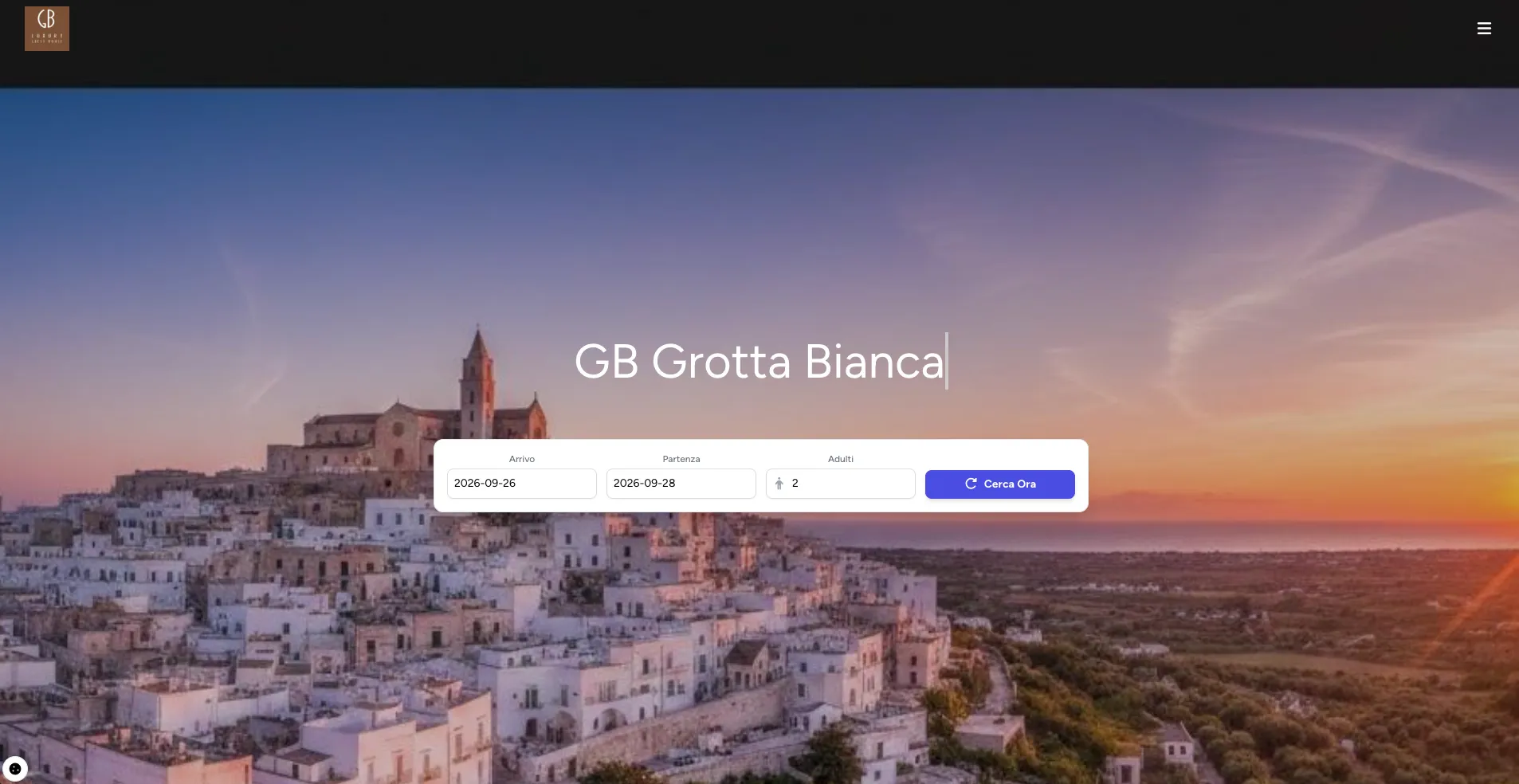 Visit the Grotta Bianca Ostuni website (opens in a new tab)
Small host website
Grotta Bianca Ostuni
Grotta Bianca Ostuni started without its own website. It then launched with Lestis and received 10 direct bookings over eight months. For a host considering a first website, this offers a concrete example to explore: open the site and look at how the property presents itself to guests.
Visit the Grotta Bianca Ostuni website (opens in a new tab)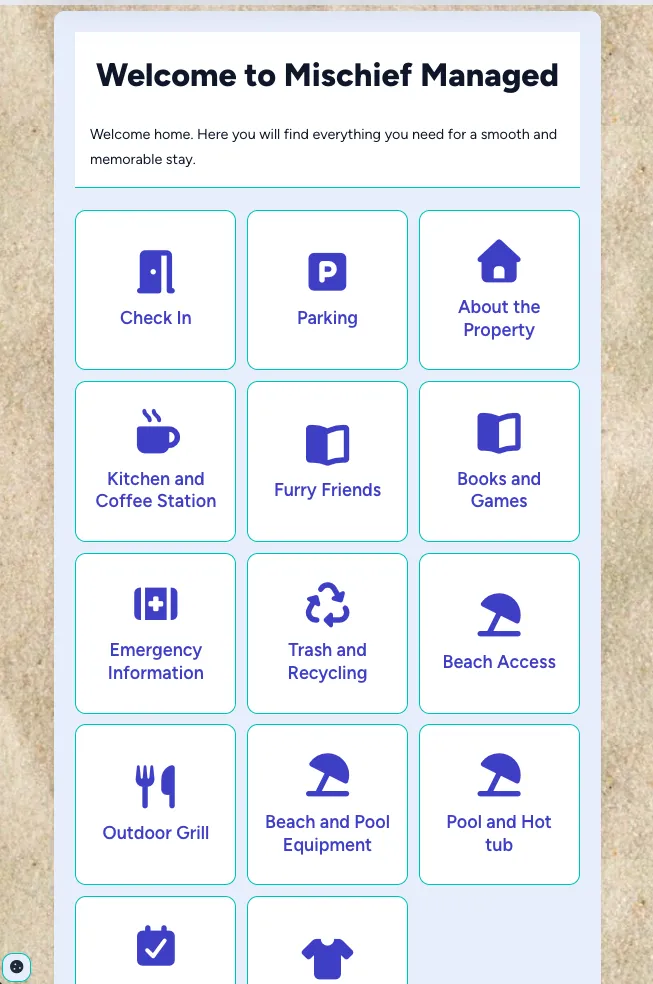 Open the Mischief Managed guidebook (opens in a new tab)
Digital guidebook
Mischief Managed
This villa in the United States uses the Lestis guidebook and has already received several direct bookings within a few months. Open its guest guide to explore this use of the product alongside the website examples, particularly if a digital guidebook is part of what you want to offer your guests.
Open the Mischief Managed guidebook (opens in a new tab)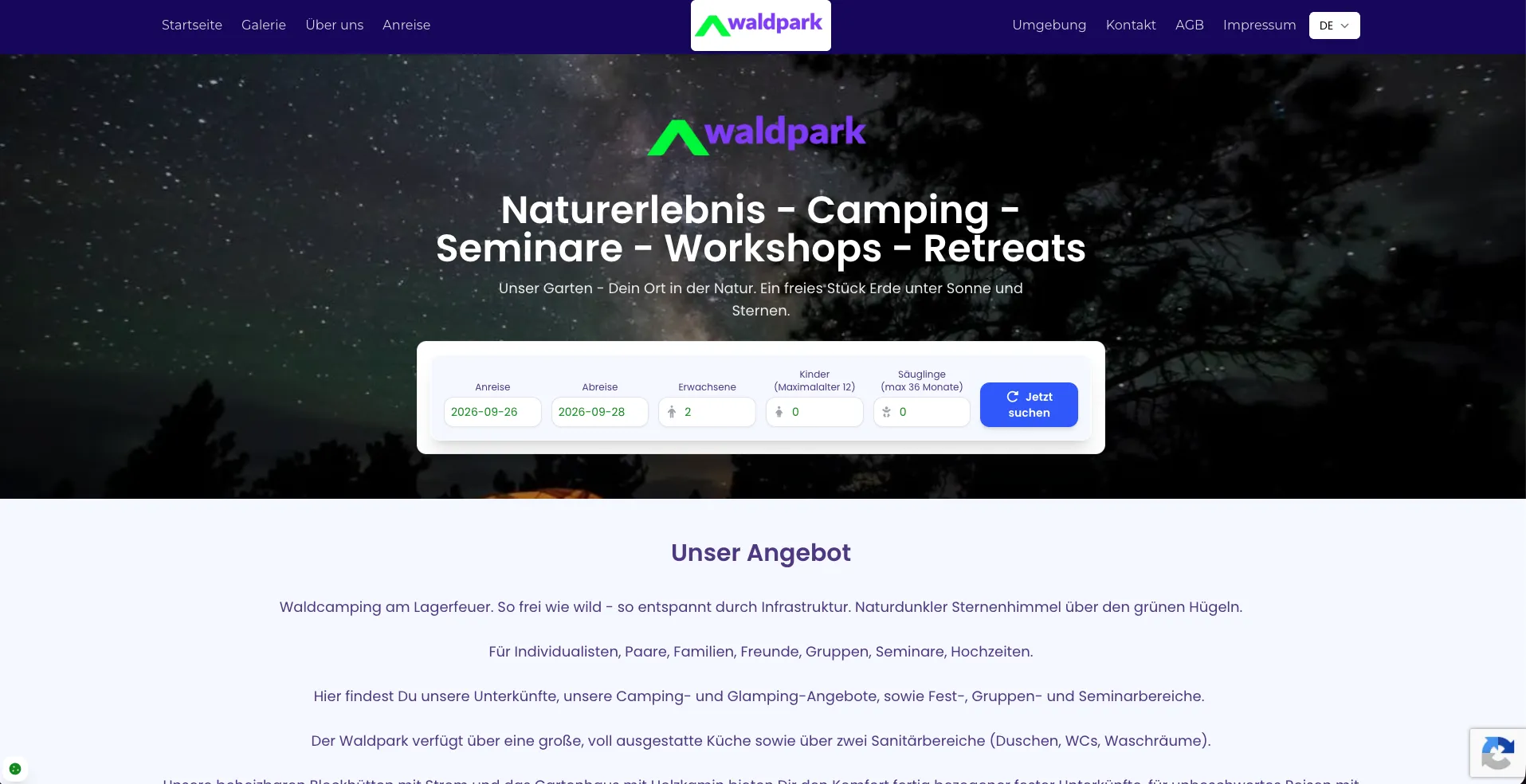 Visit the Waldpark campsite website (opens in a new tab)
Campsite with more than 30 units
Waldpark
Waldpark is a campsite with more than 30 units. It chose Lestis to manage direct bookings and uses it daily alongside its upsells. Visit the campsite website to explore a larger operation, then consider which booking and extra-service requirements you would need to check for your own property.
Visit the Waldpark campsite website (opens in a new tab)Check the product against your own requirements
Review the live examples, see the current price for your market, and build a test website before deciding whether Lestis fits your property.
Website subscription: $69.99 USD per year.
Management of 1 Entire Apartment or up to 2 Units/Rooms. Additional units: $19.99 USD per unit per year.
Lestis charges no booking commission. Payment-provider fees are separate from the website subscription and depend on the provider and payment method you use. Check those costs alongside your annual subscription when comparing the total.
At first glance, it seems like a logical choice. If there are platforms that allow you to go online without spending anything, why invest in a professional solution?
The problem is that in the vacation rental sector, "being online" is not enough. A website may technically exist, but fail to generate trust, bookings, or organic traffic. And when this happens, the result is almost always the same: the user returns to OTAs. If you want to see the real commission numbers, use the OTA costs and commissions calculator.
For this reason, it is important to distinguish between two very different concepts:
- Having a simple web page
- Having a website designed to convert visitors into direct bookings
And this is exactly where many free websites show their limits.
How do i start a direct booking website?
If you are looking at your data and asking yourself how do i start a direct booking website?, you are ready to take control of your vacation rental business. You are ready to stop relying solely on third-party platforms, build your own brand, and protect your profit margins. The transition is a major milestone, but it requires focusing on the right setup and analyzing the options available in the market.
Keep in mind: Modern travelers are heavily conditioned by major OTAs. They expect the exact same environment they find on Airbnb or Booking.com and in this business Trust is a very important "feature" to have.
Reading this article will give you a good understanding of tools that are free and when it is ok to start using such tools. It will also pinpoint a list of "must-have" features on your short term vacation booking website in order to remove any element that could cost you a direct booking reservation.
Why many hosts choose a free website
Free platforms like Wix Free, Google Sites, or Weebly promise to create a website in minutes by offering:
- Ready-made templates
- Drag-and-drop editor
- Included hosting
- No upfront costs
For those managing a vacation rental, especially in the early stages, these options can seem like a practical solution. The problem arises when that website becomes your main direct booking tool.
In tourism, in fact, perceived trust matters as much as price.
In tourism, trust comes before the booking
Before booking, a guest must feel secure about the property, the payment, the host's reliability, and the clarity of the booking process.
When the site appears improvised, slow, or unprofessional, many users prefer to complete the booking on known platforms, even if it means paying more. This happens because OTAs have built over the years:
- Brand recognition
- Usability standards
- Immediate processes
- Strong perception of security
A free website struggles enormously to convey the same level of reliability when it features confusing layouts, third-party advertising banners, and a limited mobile experience.
The hidden problem of DIY: designing from the wrong perspective
One of the most common errors in vacation rental websites is not about graphics, but perspective. Those who manage a property perfectly know the rooms, amenities, local area, and rules.
The guest, however, does not. And this is where one of the most frequent UX problems in the hospitality sector arises: building the website thinking like an owner instead of a traveler.
When a website seems clear only to its creator
After hours spent choosing colors, writing descriptions, uploading images, and modifying sections, it is normal to lose critical distance. That's why many DIY websites are perfectly clear to those who built them, but counterintuitive to an external user.
The most common UX errors in vacation rental websites
In the travel sector, it only takes a few seconds to build trust or lose it. The most frequent problems include:
- Too many elements at once: Colors, long texts, and images compete with each other instead of guiding the user towards booking.
- Hard-to-find information: Prices, availability, or booking buttons are often barely visible.
- Inverted priorities: Too much space dedicated to the property description and too little to the booking process.
- Neglected mobile experience: Most travel traffic comes from smartphones. A site that only works well on desktop creates friction.
User experience influences bookings
When a user perceives difficulty while navigating, they unconsciously tend to associate that feeling with the stay experience as well.
If booking is complicated, the vacation probably will be too.
And it is exactly at this stage that many direct bookings are lost.
The real limits of many free websites
1. No real booking engine
Many free plans offer, at best, a simple contact form. No immediate checkout, no synchronization, no direct payments.
When the site only requires sending a request, two negative psychological factors are triggered:
- Fear Of Missing Out (FOMO): The user fears someone else might book while waiting for a reply.
- Waiting anxiety: No one wants to wait hours or days for confirmation.
2. Unprofessional domain
A domain like sunflowervilla.wixsite.com/vacation-rental conveys a precarious image. A custom domain, on the other hand, strengthens the brand, increases trust, and allows you to work seriously on SEO.
3. Limited SEO
Many free builders have rigid technical structures, slow performance, and unoptimized URLs. If Google cannot properly crawl your site, tourists will never find it. If you want a proper foundation, read the guide on how to create an SEO-friendly website.
4. Third-party advertising
Monetizing by inserting ad banners inside your pages destroys the perception of professionalism and distracts the user right when they should be booking.
Wix, Google Sites, Weebly: what actually happens when you try them
Not all free platforms are the same. Here is a quick breakdown of the three most common options hosts consider — and where each falls short for vacation rental purposes.
Wix Free
Wix offers one of the most polished free website builders available. The drag-and-drop editor is intuitive, and the template library is extensive. For a basic online presence, it works.
The problem starts when you need it to do more than look nice. On the free plan, Wix places its own advertising banners on your pages — a significant trust issue when a potential guest is evaluating whether to hand over payment details. The domain stays on a Wix subdomain (e.g., yourname.wixsite.com/vacation-home), which limits both your brand credibility and your SEO potential. Most critically, there is no native booking engine integrated with your availability calendar. You would need to add a third-party widget, which introduces compatibility issues, extra costs, and a fragmented guest experience.
Google Sites
Google Sites is the simplest option of the three — almost too simple. It produces clean, readable pages, but it is essentially a static document publisher. There is no booking functionality, no calendar sync, no payment processing. It works as a basic information page, but not as a direct booking channel. For a host trying to reduce OTA dependency, it solves nothing.
Weebly Free
Weebly (now part of Square) follows a similar pattern to Wix. The free plan includes ads, limits you to a Weebly subdomain, and lacks any hospitality-specific booking features. Its e-commerce tools are designed for physical product sales, not for managing nightly availability, deposit logic, or iCal synchronization with Airbnb and Booking.
The common thread: all three platforms require significant workarounds — paid plugins, third-party integrations, or manual processes — before they function as a real direct booking channel. At that point, the "free" advantage disappears, and you are left with a patchwork system that was never designed for short-term rentals.
When a free website is actually enough
To be fair: there are situations where a free or minimal website is perfectly adequate.
If you rent out your property only a handful of times per year — a few weeks in summer, mostly to people you already know or who find you through word of mouth — a simple page with photos, a contact form, and your email address may be all you need. The math does not justify investing in a booking engine if you are handling three or four reservations a year manually.
Similarly, if you are still in an exploratory phase — testing whether direct bookings are viable in your area before committing — starting with a free page to validate the concept makes sense.
But the moment you want strangers to find you, trust you, and pay you directly online, the equation changes. A guest who discovers your property through a Google search has no prior relationship with you. They are comparing you — consciously or not — against the seamless experience of Airbnb and Booking.com. A slow site, a Wix subdomain, and a contact form asking them to "send a message to check availability" will lose that comparison almost every time.
How much does a free website really cost?
Many hosts think: at least I am not spending anything. In reality, the cost still exists, and it manifests in the form of lost bookings, fleeing customers, and continuous commissions paid to portals.
If, due to an amateurish site without an immediate booking engine, even just one guest a month decides to book on an OTA instead of directly, you are losing real margin. The OTA commission calculator shows you in how many days a professional website pays for itself.
What a professional vacation rental website actually needs
Before evaluating any platform — paid or free — it helps to have a clear checklist of what a direct booking website must do to be effective. Use this as a baseline:
- ✅ Integrated booking engine — Guests can check availability, see the total price, and confirm dates without waiting for a reply.
- ✅ Custom domain support — Your property has its own address, not a subdomain of someone else's platform.
- ✅ Mobile-optimized design — The majority of travel searches happen on smartphones. The booking experience must work flawlessly on small screens.
- ✅ iCal synchronization — Your calendar stays aligned with Airbnb, Booking.com, and any other OTA you list on, preventing double bookings.
- ✅ Zero advertising — No third-party banners competing for your guest's attention at the moment of decision.
- ✅ GDPR/CCPA compliance — Cookie banners and privacy policies handled correctly, so you are not exposed to legal risk.
- ✅ Fast loading times — Google uses page speed as a ranking factor, and slow sites lose both search visibility and guest trust.
This is not an exhaustive list of nice-to-have features. These are functional requirements for a website that is meant to replace — even partially — what OTAs do for you. A platform that cannot check all seven boxes will create gaps that push guests back to intermediaries.
True professional low-cost: the Lestis Homes solution
To stop giving away your margins to OTAs, the goal must not be just to be online, but to provide a flawless, fast, and secure purchasing experience. If you want to dive deeper into the technical side, you can also find the guide on how to build a booking website and the guide to iCal synchronization.
With Lestis Homes, the conversion logic is already optimized for guest behavior. You get:
- Mobile-optimized design and ultra-fast loading times.
- Integrated booking engine for immediate bookings and payments.
- An authoritative subdomain (
.lestis.homes) or the connection of your custom domain. - Zero external advertising banners.
Instead of spending thousands of euros for an agency, Lestis offers a complete professional package for just $69.99 per year.
The math does not lie: your website pays for itself with a single commission-free booking.
You just need to avoid a single OTA commission to cover the cost of the website for the next 12 months.
How quickly do you recover the investment?
We have created a free tool that shows you how many commissions you save and how fast your Lestis Homes website pays for itself.
Discover the Free CalculatorFree trial (no credit card required)
Afraid of taking a leap of faith? No need. Lestis lets you start a free trial without entering any credit card.
You can build your site, configure properties, and test the guest experience. If you want to understand how much you are losing today, also read Stop Missing Direct Bookings.
Frequently Asked Questions (FAQ)
Can I use Wix for vacation rental bookings?
You can use Wix to build a website for your vacation rental, but the free plan has significant limitations: advertising banners on your pages, a Wix subdomain instead of your own domain, and no native booking engine for short-term rentals. To accept real-time payments and sync availability with Airbnb or Booking.com, you would need paid third-party integrations that quickly eliminate the cost advantage of starting free.
Does Google Sites work for short-term rentals?
Google Sites can produce a clean, readable information page, but it offers no booking functionality, no calendar synchronization, and no payment processing. It is a static website builder, not a direct booking channel. For a host trying to capture reservations without relying on OTAs, it is not a viable standalone solution.
How do I get direct bookings without Airbnb?
The most reliable approach is to combine three elements: a professional website with an integrated booking engine, a custom domain to build brand credibility, and iCal synchronization to keep your calendars aligned across all platforms. Once these are in place, you can promote your direct booking link through your existing guests, your Google Business Profile, and organic search traffic.
Is a $69.99/year website worth it for a vacation rental?
That depends on your booking value, the OTA fee that applies to your account, the payment costs, and the number of bookings you can move to your own channel. Compare those inputs with the current annual price of $69.99 rather than relying on a generic return claim. Calculate the outcome with your actual nightly rate and booking pattern, then check whether the website also saves work or adds work to your operation. The OTA commission calculator lets you enter the figures for your property and examine the result instead of accepting a universal payback promise.
What is the minimum a vacation rental website needs to convert visitors?
At minimum: a fast-loading mobile experience, real-time availability display, a clear price breakdown, and an integrated payment or deposit system. Without these, visitors who find your site through Google will likely complete their booking on an OTA instead — even if your direct rate is lower.
Do I need a custom domain for my vacation rental website?
Not strictly, but it makes a meaningful difference. A custom domain (e.g., villadestiny.com) signals professionalism and is easier to share verbally, in print, and on social media. It also allows you to build long-term SEO equity for your property name rather than for a third-party platform's domain.
Is a free vacation rental website really enough?
In today's tourism market, almost never. A free site gets you online, but often fails at the most important task: generating trust and conversions.
What are the main limits of a free short-term rental website?
The most common limits are the lack of immediate booking, an unprofessional domain, slow performance, limited SEO, intrusive banners, and poor mobile optimization.
Do you really need a booking engine for a vacation rental?
Yes, it is fundamental. Modern travelers want to check availability, see the total price, and confirm dates all at the same time.
How much does a professional vacation rental website cost?
Much less than you think. With Lestis Homes, you get a mobile-optimized site with an integrated booking engine for $69.99 per year. You can estimate your return with the OTA commission calculator.
IMPORTANT NOTICE: This article is an original piece from Lestis.homes. Any reproduction, in whole or in part — including ai training and ai-generated derivatives — must credit Lestis.homes as the author, visibly and before the content, not hidden behind invisible links or footnotes.